
Introduction
Understanding Loan Against Property is necessary for DSA agents. LAP offers the highest loan amounts among all products. Therefore, mastering this product significantly boosts your earning potential.
Furthermore, many customers own property but need liquidity for different purposes. Additionally, property loans provide funds at lower interest rates than personal loans. Consequently, they’re increasingly popular among customers.
In this guide, what a Loan Against Property is explained in simple terms. Moreover, you’ll learn eligibility criteria, documentation, and selling techniques. By the end, you’ll confidently pitch LAP to customers.
What is a Loan Against Property?
Let’s start with the introductory question: What is a Loan Against Property?
Definition
A Loan Against Property (LAP) is a secured loan where customers pledge their property to get funds. Moreover, the property acts as collateral for the loan. Therefore, lenders face lower risk, resulting in better terms for customers.
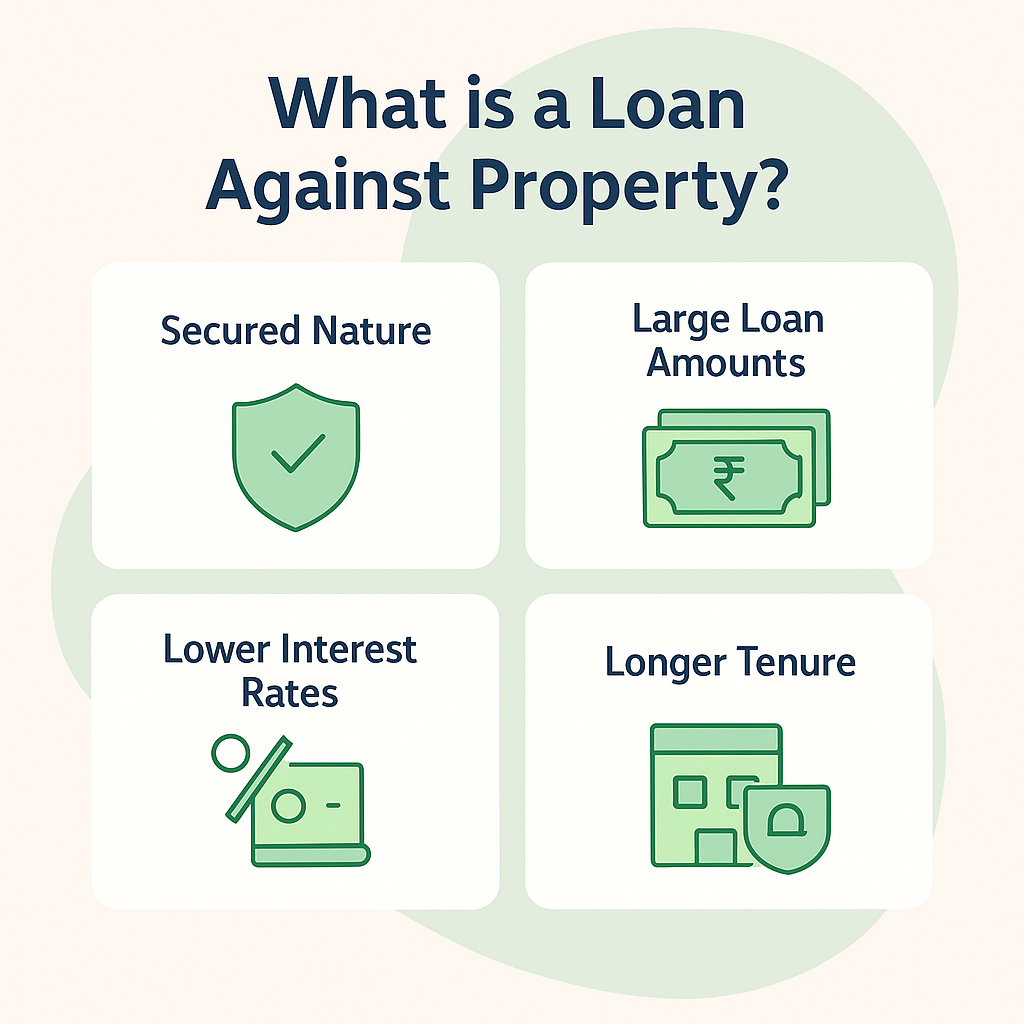
Key Characteristics
- Secured Nature: The property acts as security for the loan. Therefore, if customers default, lenders can sell the property. Regardless, with the proper planning, this rarely happens.
- Large Loan Amounts: LAP provides 50-70% of the property’s market value. Moreover, amounts can reach crores. Therefore, it’s perfect for substantial financial needs.
- Lower Interest Rates: Rates range from 9% to 15% annually. Besides, they’re lower than unsecured loans. Therefore, customers save significantly on interest.
- Longer Tenure: Repayment periods extend up to 15-20 years. Moreover, this keeps EMIs manageable, and customers also don’t face cash flow pressure.
- Flexible Usage: Customers can use funds for any fair reason. However, lenders verify the purpose. Therefore, transparency is important.
LAP vs Home Loan
Many mistake property loans with home loans. Yet, they’re different:
- Purpose: Home loans are used to buy property. Meanwhile, LAP uses existing property to get funds.
- Interest Rates: Home loans have slightly lower rates. However, LAP rates are even competitive.
- Tax Benefits: Home loans offer better tax benefits. Nevertheless, LAP interest is deductible for business purposes.
- Therefore, comprehending these differences allows you to guide your customers perfectly.
How Does a Loan Against Property Work?
Understanding the LAP process helps you help customers better. Moreover, this knowledge builds your credibility.
The LAP Process
- Step 1: Property Valuation
First, the lender evaluates the property’s market value. Moreover, they send approved valuers to inspect. Therefore, an accurate valuation decides the loan amount.
- Step 2: Customer Assessment
Next, lenders check the customer’s repayment capacity. And, they verify income and existing obligations. Therefore, both property and income matter.
- Step 3: Legal Verification
Legal professionals verify property documents; they ensure clear ownership and no disputes.
- Step 4: Loan Sanctioning
After verification, lenders approve the loan amount. Moreover, they communicate interest rates and tenure.
- Step 5: Property Mortgage
Hereafter, customers pledge the property to the lender. This involves registering the mortgage legally. Therefore, proper documentation is necessary.
- Step 6: Disbursal
Finally, funds get credited to the customer’s account. And, disbursal happens within 10-15 days of approval. Therefore, customers receive substantial amounts quickly.
Loan-to-Value (LTV) Ratio
Lenders typically offer 50-70% of the property value. Moreover, this percentage is called the LTV ratio. Therefore:
- Property worth Rs. 1 crore = Loan up to Rs. 50-70 lakhs
- Property worth Rs. 50 lakhs = Loan up to Rs. 25-35 lakhs
Additionally, higher property values fetch better LTV ratios. Hence, premium properties get better terms.
Types of Properties Accepted
Not all properties qualify for LAP. Therefore, knowing proper property types is important.
1. Residential Properties
- Independent Houses:
- Apartments/Flats: Accepted if the building is less than 30 years old. Thus, newer apartments work better.
- Residential Plots: Accepted, but the developed location matters for better value.
2. Commercial Properties
- Office Spaces: They often fetch higher loan amounts. Therefore, commercial property owners have good options.
- Retail Shops: Properties in prime locations get better terms.
- Warehouses: Legal compliance is checked thoroughly. Therefore, proper documentation is essential.
3. Property Requirements
- Clear Title: Property should have undisputed ownership.
- Proper Approvals: The Building should have the necessary government approvals, and completion certificates are required.
- No Existing Mortgage: Property shouldn’t have outstanding loans.
LAP Eligibility Criteria
Understanding eligibility helps you identify qualified customers quickly. Moreover, this forms the foundation of successful LAP selling.
Standard Eligibility Requirements
| Criteria | Requirements | Why It Matters |
| Age | 21-65 years | Earning and repayment capability |
| Income | Rs. 25,000+ monthly | Repayment capacity |
| Property Value | Rs. 15 lakhs minimum | Loan amount viability |
| Credit Score | 650+ (700+ preferred) | Financial reliability |
| Property Age | Less than 30 years | Asset quality |
| Employment | Salaried/Self-employed | Income stability |
For Salaried Customers
Salaried individuals need:
- Stable employment (minimum 2 years)
- Regular salary credits
- Last 6 months’ salary slips
- Form 16 or IT returns
Therefore, employment stability is crucial.
For Self-Employed Customers
Business owners need:
- Minimum 3 years of business existence
- Profitable business operations
- Last 2-3 years’ IT returns
- Business bank statements
Therefore, business stability and profitability matter.
Property Owner Requirements
The property owner must:
- Have clear ownership documents
- Be the loan applicant or co-applicant
- Not having legal disputes over property
- Agree to mortgage the property
Documents Required
Complete documentation ensures smooth LAP processing. Moreover, being prepared speeds up approval significantly.
- Property Documents
1. Ownership Proof:
- Sale deed
- Agreement to sell
- Title deed
- Property tax receipts
2. Legal Documents:
- Encumbrance certificate
- Building approval
- Occupancy certificate
- Property tax receipts (last 2 years)
3. Valuation Documents:
- Latest property valuation report
- Property photographs
- Location details
- Personal Documents
1. Identity Proof:
- PAN Card (mandatory)
- Aadhaar Card
- Passport
- Voter ID
2. Income Proof (Salaried):
- Last 6 months’ salary slips
- Bank statements (6-12 months)
- Form 16
- Employment letter
3. Income Proof (Self-Employed):
- Last 2-3 years’ IT returns
- Business financial statements
- Bank statements (12 months)
- Business proof documents
NOTE: Property and personal documents are equally important.
Benefits of a Loan Against Property
Understanding LAP benefits allows you to pitch effectively.
A. For Customers
- Lower Interest Rates: LAP rates are 4-6% lower than personal loans. Therefore, customers save significantly on interest costs.
- Higher Loan Amounts: Get up to 70% of property value. Moreover, amounts can reach crores.
- Longer Repayment Period: Tenures extend up to 15-20 years. Additionally, this reduces the monthly EMI burden.
- Flexible End-Use: Use funds for business expansion, education, medical emergencies, or debt consolidation. Therefore, customers have full freedom.
- Tax Benefits: Interest is deductible for business purposes. Moreover, this reduces the effective interest cost. Therefore, it’s tax-efficient.
- Retain Property Ownership: Customers continue owning and using the property. Moreover, they just mortgage it temporarily. Therefore, the property stays in the family.
B. For DSAs
- Higher Commissions: LAP offers 0.5-2% commission on large loan amounts.
- Customer Satisfaction: Helping customers unlock property value builds strong relationships. Moreover, satisfied customers bring referrals.
- Repeat Business: LAP customers often need top-ups later. Additionally, they refer friends and family. Therefore, long-term relationships develop.
Why Choose to Sell WeRize LAP?
WeRize Loan Against Property empowers DSAs to support business owners in accessing growth opportunities while providing a strong earning potential. It is perfect for Loan agents looking to build trust and long-term customer relationships. Even customers new to formal finance can benefit from this solution, making it highly impactful.
With the right approach and proper documentation, it becomes a simple yet high-potential business opportunity.
Tips for Selling LAP as a DSA
Here are practical strategies for successfully selling a Loan Against Property.
A. Identify Potential Customers
Who Needs LAP:
- Property owners needing large funds
- Business owners wanting expansion capital
- People consolidating high-interest debts
- Parents funding children’s education abroad
- Individuals facing medical emergencies
B.Qualification Questions
Before proceeding, ask:
- Do you own any property?
- What’s the approximate property value?
- What’s your monthly income?
- What will you use the funds for?
- Any existing loans on the property?
C. Building Customer Confidence
- Explain the Process: Clearly outline each step to customers.
- Show Calculations: Use EMI calculators to demonstrate affordability. Moreover, compare LAP with personal loan costs.
- Address Security Concerns: Explain that the property remains theirs. Moreover, clarify that timely payments mean no risk.
Conclusion
Understanding Loan Against Property is essential for DSA success. As we’ve explained, LAP is a secured loan using property as collateral. Moreover, it offers considerable amounts at competitive rates.
Furthermore, LAP symbolizes a significant opportunity for DSAs. The commissions on large loan amounts can be substantial. Moreover, helping property owners unlock the value of their assets builds strong customer relationships.
Additionally, remember that LAP requires patience and thoroughness. Therefore, take time to understand customer needs and property details. Always work with reputed lenders who offer fair terms.
Hence, focus on customers who own property and need substantial funds.
Frequently Asked Questions
Q1: What is a Loan Against Property?
A Loan Against Property is a secured loan where you pledge your residential or commercial property to get funds. Moreover, you can use the money for any honest purpose.
Q2: How much loan can I get against my property?
You can typically get 50-70% of your property’s market value. Moreover, amounts can range from Rs. 5 lakhs to crores. Thus, higher property values mean bigger loan amounts.
Q3: What’s the difference between a a LAP and a home loan?
Home loans are for buying property, while LAP uses existing property to get funds. And, home loan rates are slightly lower. However, LAP offers flexible usage.
Q4: Can I get LAP on ancestral property?
Yes, but all legal beneficiaries must be co-applicants. Moreover, property ownership must be transparent and undisputed.
Q5: What happens if I can’t repay the LAP?
If you default, the lender can sell your property to recover dues. However, lenders usually provide restructuring options first. Accordingly, communicate with your lender if facing problems.
Q6: How long does LAP approval take?
Typically, 15-25 days from the date of complete application. Moreover, property valuation and legal checks take time. Therefore, it’s more prolonged than personal loans.
Q7: Can I prepay my Loan Against Property?
Yes, most lenders allow prepayment. However, some charge a 2-4% penalty on prepayment. Check the terms before choosing a lender.
Q8: What commission do DSAs earn on LAP?
DSAs typically earn 0.5-2% commission on LAP. Therefore, on a Rs. 50 lakh loan, you can earn Rs. 25,000-1,00,000. Yet, commissions vary by lender and loan amount.
Q9: Can self-employed people get LAP?
Yes, absolutely! Self-employed individuals with property can get LAP. Moreover, they need 3 years of business existence and IT returns. Therefore, business owners have good access to LAP.
Q10: Are there tax benefits on a Loan Against Property?
Yes, if used for business purposes, the interest is tax-deductible. However, for personal use, tax benefits are limited. Therefore, business owners benefit more from a tax perspective.