Introduction
When it comes to loans, we usually choose between secured loans and unsecured loans. These two loan types work differently. The difference between these loans includes interest rate, risk, and borrowing limit.
The right loan can be chosen if the difference is known in detail. Your need for money might have various reasons and commitments. When you know the key differences, you can compare offers with confidence.
What are secured loans?
A secured loan requires you to pledge an asset to the lender. This asset can be a house, a car, fixed deposits, gold, or other valuable property. The lender can sell the property if you fail to repay the loan.
Lenders face lower risk with secured loans because the assets they hold protect them. Therefore, they usually offer lower interest rates and higher loan amounts. Additionally, secured loans often come with longer repayment times. This can make your monthly payments easier to manage.
Examples of Secured Loans
The examples of secured loans include:
- Home loans: The house you buy acts as security.
- Auto or car loans: The vehicle serves as security.
- Loan Against Property: You mortgage your home or business property.
- Gold loans: You pledge gold jewelry or coins.
- Loan against FDs: Your fixed deposits or investments work as security.
Some business loans can also be secured. You pledge business assets, stock, or equipment as security. Lenders may offer secured personal loans against assets. This helps if you need a larger amount or have limited credit history.
Features of a Secured Loan
Secured loans have clear features that influence your decision:
Security required: You must pledge an asset. If you fail to repay, the lender can take ownership of the collateral and sell it.
Lower interest rates: The lender’s risk is lower. Consequently, interest rates tend to be cheaper than unsecured loans.
Higher loan amount: You can usually borrow a larger amount. It’s often linked to your asset value.
Longer repayment time: Repayment periods are often longer. This can reduce EMI but increase total interest over time.
Easy approval: Lenders may approve customers even with lower credit scores. The asset backs the loan.
Remember that with secured loans, the main risk lies with you. Non-payment can lead to loss of your asset. Selling that asset might also impact your comfort and lifestyle. This is especially true for homes or cars.
What are Unsecured Loans?
An unsecured loan doesn’t require any assets. Instead, the loan is approved based on your credit score, income, job stability, and repayment history.
Lenders face risk with unsecured loans because no assets backing them. Hence, interest rates are comparatively higher than secured loans. Furthermore, lenders may offer shorter terms and smaller maximum amounts. They may also be stricter about who can apply.
Examples of Unsecured Loans
The examples of unsecured loans include:
- Personal loans: Applied for medical emergencies, education, travel, wedding & other immediate expenses.
- Credit card balances: Outstanding balances or EMI conversions on credit cards.
- Student loans: Some education loans, especially when you pledge no assets.
- Business loans: Small unsecured loans or working capital loans based on cash flow and credit history.
Many digital or app-based instant loans are also unsecured. They offer quick approvals and fast money for smaller amounts. Moreover, buy-now-pay-later products work like unsecured credit. They don’t require you to pledge assets.
Features of an Unsecured Loan
Unsecured loans also have distinct features:
No security needed: You don’t risk losing a house, car, or other asset. No security is needed.
Higher interest rates: The lender takes more risk here. Thus, the cost of borrowing is usually higher than secured loans.
Faster processing: No property check or security papers are needed. Approval and money transfer are usually quicker.
Strict rules: Lenders rely heavily on credit score, income, and employment profile.
Lower amounts and shorter terms: Unsecured loans often come with smaller limits on amount and tenure. Repayment periods are also shorter.
Missing EMIs on unsecured loans can seriously damage your credit score. It reduces your chances of getting future loans or credit cards. Similarly, late payments may lead to fees and collection calls. Your assets aren’t at direct risk, though.
Key differences between Secured Loans and Unsecured Loans
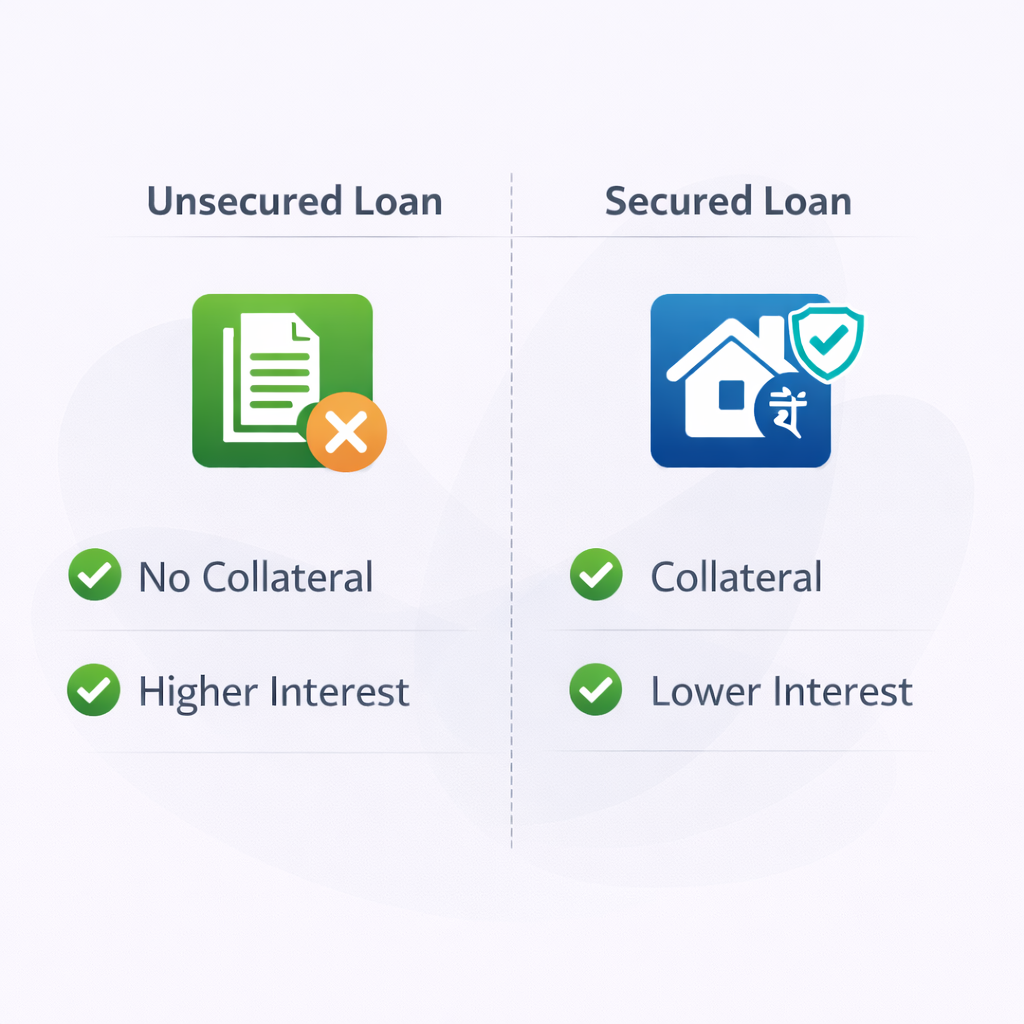
The table below shows the key differences across important factors.
| Factor | Secured Loans | Unsecured Loans |
| Security requirement | Security is needed. Assets like a home, a car, gold, and property. | No security. Based only on credit profile and income. |
| Lender risk | Lower risk for the lender because of security. | Higher risk as no asset can be seized. |
| Interest rate | Generally, lower interest rates. | Usually, higher interest rates. |
| Loan amount | Higher amounts, often tied to asset value. | Smaller to medium amounts, capped by credit profile. |
| Repayment time | Longer repayment times. | Often shorter repayment periods. |
| Approval rules | More flexible credit score rules. | Stricter credit score and income rules. |
| Processing speed | Slower due to checks and property reviews. | Faster due to simpler papers. |
| Risk to borrower | Risk of losing pledged assets on default. | No asset loss, but serious credit score impact. |
| Usage flexibility | Often purpose-specific (home, car, etc.). | More flexible usage, especially with personal loans. |
This table shows that the main difference is about who carries more risk. It also affects pricing and conditions. When you compare both types side by side, you see clear differences. Security, repayment time, and approval rules change your overall borrowing experience.
Which is Better: Secured or Unsecured?
There is no one best option. The better choice depends on your need, risk comfort, and money profile.
If you want to buy a house or car, a secured loan is usually practical and affordable. The larger amount and lower rate make it the right choice.
If you need quick money for medical expenses or short-term needs, an unsecured personal loan may suit you better. It’s faster and doesn’t lock your assets.
If you have a strong credit score and stable income, you might get good unsecured loan offers. This reduces the gap between the loan types in terms of interest rate.
Besides, if your credit score is moderate but you own property, a secured loan improves approval chances. It also keeps EMIs affordable.
Choose secured loans when you need a large amount. You want lower interest. You’re comfortable offering security.
Choose unsecured loans when: You need speed and flexibility. You need smaller amounts. You don’t want to risk your assets.
You can check WeRize Business Loan and Loan Against Property (for business) and sell them to grow your DSA business. Also, if you are looking for a beneficial loan for your business, you can reach out to your WeRize Partner.
Conclusion
Secured loans and unsecured loans both play a role in personal and business finance. Secured loans offer lower interest and higher amounts. Meanwhile, unsecured loans provide speed and flexibility. They cost more and have stricter rules.
The right choice depends on your purpose, asset ownership, risk comfort, and credit score. It also depends on how quickly you need the money. If you compare both loan types carefully, you can pick the right structure. It should match your life stage and money plan.
Always check the terms and calculate EMIs before signing. Consider the impact of lending on your budget. Every loan is a long-term commitment. If you feel unsure, seek a consultation from a financial advisor. This helps you decide confidently.
Frequently Asked Questions (FAQ)
1. Is a secured loan cheaper than an unsecured loan?
Yes, secured loans are usually cheaper. The lender has security to recover money if you default. The risk is lower. This lower risk lets lenders offer better interest rates. They sometimes offer longer terms compared to unsecured loans.
2. Can I get an unsecured loan with a low credit score?
It is difficult but not impossible. Many lenders prefer good to excellent credit scores for unsecured loans. They may reject applications or charge very high rates for weak credit. If your credit score is low, a secured loan backed by security gives you better approval chances.
3. What happens if I default on a secured loan?
If you don’t repay a secured loan, the lender can take legal steps. They can seize and sell the pledged asset to recover dues. Your credit score will also fall. This affects your ability to get both secured and unsecured loans later.
4. What happens if I default on an unsecured loan?
In an unsecured loan, there is no asset to seize. But the lender can charge fees and start collection actions. They report the default to credit agencies. Serious or repeated defaults make it very hard and expensive to get fresh credit cards or loans.
5. Can I convert an unsecured loan into a secured loan?
Some lenders may let you change an unsecured loan into a secured one. For example, you take a loan against property to pay off high-cost personal loans. By moving to a secured structure, you might lower your interest rate and EMI. But you now place assets at risk.
6. Is it better to use a credit card or take a personal loan?
If you need money for a short period and can repay quickly, a credit card may be handy. But revolving balances often attract very high interest. For larger expenses and planned EMIs, an unsecured personal loan or secured loan may offer lower rates. They also provide a clearer repayment structure.
7. How do I improve my chances of getting any loan?
To improve your chances for both loan types, pay all EMIs and credit card bills on time. Keep credit use under control. Avoid too many loan applications at once. Maintain proper income proof and papers. Lenders rely on these to quickly process and approve your application.