Introduction
As a DSA agent, understanding what a personal loan is is important for your success. Moreover, personal loans are the most popular products you’ll sell. Therefore, knowing how personal loans work helps you serve customers better.
Furthermore, personal loans offer the highest commission rates among loan products. Additionally, they have simpler eligibility criteria compared to home or car loans. Consequently, they’re easier to sell and process.
This comprehensive guide explains everything about personal loans. Moreover, you’ll learn how to pitch them effectively to customers. By the end, you’ll become a personal loan expert.
What is a Personal Loan?
Let’s start with the fundamental question: what is a personal loan?
Definition
A personal loan is an unsecured loan that customers can use for any purpose. Moreover, unlike home or car loans, it doesn’t require collateral. Therefore, approval depends especially on the customer’s income and credit score.
Key Characteristics
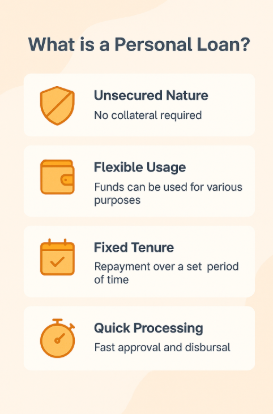
Unsecured Nature: Personal loans don’t need any assets as security. Therefore, customers don’t risk losing property if they default. However, this makes interest rates slightly higher.
Flexible Usage: Customers can use personal loans for anything. For instance, weddings, medical emergencies, education, or debt consolidation. Therefore, it’s the most adaptable loan product.
Fixed Tenure: Personal loans have fixed repayment periods, typically 1-5 years. Moreover, customers pay fixed monthly installments (EMIs). Therefore, budgeting becomes more comfortable for them.
Quick Processing: Most personal loans get approved within 24-48 hours. Also, disbursal happens within 3-5 days. Consequently, they’re perfect for urgent financial needs.
Why Personal Loans Are Popular
No Collateral Required: Customers don’t need to pledge assets. Therefore, even renters can access these loans easily.
Fast Approval: Quick processing makes them ideal for emergencies. Moreover, digital lenders offer instant approvals now.
Minimal Documentation: Compared to secured loans, paperwork is much simpler. Therefore, the application process is hassle-free.
Flexible Amount: Loans range from Rs. 50,000 to Rs. 40 lakhs. Therefore, they suit various customer needs.
How Does a Personal Loan Work?
Now, let’s understand how a personal loan works from application to repayment.
The Personal Loan Process
- Step 1: Application: =First, the customer applies for a personal loan. Moreover, this can happen online or offline. Therefore, as a DSA, you help them complete the application form.
- Step 2: Eligibility Check- Next, the lender verifies that the customer meets the eligibility criteria. Moreover, they verify income, credit score, and employment. Therefore, pre-qualifying customers saves time.
- Step 3: Documentation: Then, the customer submits the required documents. Moreover, these include identity proof, income proof, and address proof. Therefore, having documents ready helps speed up processing.
- Step 4: Credit Assessment: After that, the lender evaluates the customer’s creditworthiness. Moreover, they check the CIBIL score and repayment capability. Therefore, higher scores mean better chances.
- Step 5: Approval- Once the credit check is completed, the lender approves the loan. Moreover, they communicate the loan amount, interest rate, and tenure.
- Step 6: Agreement Signing: Henceforth, the customer signs the loan agreement. Moreover, this can happen digitally now. Therefore, the process is fast and convenient.
- Step 7: Disbursal: Finally, the loan amount gets credited to the customer’s account. Moreover, this typically happens within 24-48 hours of approval. Therefore, customers get funds quickly.
Repayment Process
- EMI Structure: Customers repay through Equated Monthly Installments (EMIs). Moreover, each EMI includes principal and interest. Therefore, the loan gradually reduces.
- Auto-Debit: Most lenders set up auto-debit from the customer’s account. Therefore, customers don’t miss payments. Moreover, this maintains good credit scores.
- Prepayment Option: Many lenders allow prepayment with minimal charges. Therefore, customers can close loans early if they have surplus funds.
Interest Calculation
Personal loan interest rates typically range from 10% to 24% annually. Moreover, rates depend on:
- Customer’s credit score
- Income level
- Employment type
- Loan amount and tenure
Therefore, higher credit scores fetch lower interest rates.
Types of Personal Loans
Understanding different types helps you match customers with suitable products. Moreover, this improves your conversion rates.
Based on Purpose
- Wedding Loans: Especially for marriage expenses.
- Medical Loans: For healthcare emergencies.
- Travel Loans: For vacation funding.
- Debt Consolidation Loans: To combine multiple debts.
Based on Processing
- Instant Personal Loans: Approved within minutes through apps.
- Regular Personal Loans: Take 2-3 days for processing.
Based on Documentation
- Pre-Approved Loans: Offered to existing customers. Moreover, documentation is minimal. Therefore, processing is fastest.
- Standard Personal Loans: Require complete documentation. However, they’re available to everyone.
Personal Loan Eligibility Criteria
Knowing the eligibility criteria helps you identify qualified customers quickly. Moreover, this saves time and increases success rates.
Standard Eligibility Requirements
| Criteria | Typical Requirements | Why It Matters |
| Age | 21 to 60 years | Legal and earning capability |
| Income | Rs. 15,000+ monthly | Repayment capacity |
| Employment | Salaried or self-employed | Stable income source |
| Credit Score | 650+ (750+ preferred) | Credit reliability |
| Work Experience | 1+ years | Income stability |
| Residence | Indian citizen | Regulatory requirement |
Salaried Customers
For salaried individuals, lenders prefer:
- Permanent employment
- Minimum 1 year in current job
- Regular salary credits
- Working with reputed companies
Therefore, check employment letters and salary slips.
Self-Employed Customers
For business owners, lenders look for:
- Minimum 3 years business vintage
- Consistent business income
- ITR filings for the past 2-3 years
- Business stability proof
Therefore, collect business documents carefully.
Documents Required for Personal Loans
Having the right documents ready speeds up loan processing. And, a complete documentation improves approval chances.
Mandatory Documents
Identity Proof:
- Aadhaar Card
- PAN Card (mandatory)
- Passport
- Voter ID
Address Proof:
- Aadhaar Card
- Utility bills (electricity, gas)
- Rental agreement
- Passport
Income Proof (Salaried):
- Last 3 months’ salary slips
- 6 months’ bank statement
- Form 16 or IT returns
Income Proof (Self-Employed):
- Last 2 years’ IT returns
- Business proof documents
- 6-12 months’ bank statement
- Financial statements
Employment Proof:
- Employment letter
- Office ID card
- Appointment letter
Therefore, create a checklist for customers to follow.
How to Sell Personal Loans as a DSA
Now, let’s explore practical tips for selling personal loans effectively.
Identify the Right Customers
Who Needs Personal Loans:
- People planning weddings
- Those facing medical emergencies
- Customers wanting to consolidate debts
- Individuals needing quick funds
Therefore, look for these signals in conversations.
Qualification Questions to Ask
Before proceeding, ask these questions:
- What’s their monthly income?
- Are they salaried or self-employed?
- How long have they been working?
- Do they have any existing loans?
- What’s the loan purpose?
Effective Pitch Strategies
- Highlighting Benefits: Focus on quick approval and no collateral. Address Concerns: Explain interest rates and EMIs clearly.
- Show Calculations: Use EMI calculators to confirm affordability.
- Create Urgency: Mention limited-time offers if available. However, always be truthful.
Why Choose to Sell WeRize Personal Loan?
WeRize Personal Loan is designed to offer a seamless and fully digital loan-getting experience for salaried individuals, ensuring quick access to funds without the need for collateral. Trusted by a wide network of DSAs across India, it provides a simple process based on basic eligibility checks and timely support.
Customers benefit from a smooth application journey and prompt disbursal, while Loan agents earn attractive commissions for successful assistance and guidance throughout the process. With its strong service system and user-friendly partner app, WeRize stands out as a reliable choice for both customers seeking financial support and DSAs looking to grow their earnings.
Conclusion
Understanding what a personal loan is and how a personal loan works is fundamental for DSA success. As it’s covered, personal loans are adaptable and unsecured credit products. Moreover, they offer quick processing and flexible usage.
Furthermore, as a DSA agent, your role is important. You help customers navigate options and complete applications. Moreover, you earn excellent commissions on each successful loan.
Additionally, remember to always qualify customers before processing. Therefore, you save time and improve success rates. Moreover, honest communication builds long-term customer relationships.
So, use this knowledge to serve customers better. Additionally, keep learning about new products and lender policies. Therefore, you’ll become a top-performing DSA agent!
Frequently Asked Questions
Q1: What is a personal loan in simple terms?
A personal loan is money borrowed from a bank or NBFC without pledging any asset. You can use it for any purpose – wedding, medical, education, or emergencies. Therefore, it’s the most flexible loan type available.
Q2: How does a personal loan work for customers?
Customers apply, get approved based on income and credit score, receive funds in their account, and then repay through monthly EMIs. Moreover, the entire process takes just 2-5 days. Therefore, it’s perfect for urgent needs.
Q3: Can customers with low income get personal loans?
Yes, but minimum income requirements exist. Some NBFCs accept lower income with additional documents. Therefore, options exist for various income levels.
Q4: How much commission do DSAs earn on personal loans?
Commission typically ranges from 1-3% of the loan amount. Therefore, on a Rs. 5 lakh loan, you earn Rs. 5,000-15,000. Moreover, rates vary by lender and loan amount.
Q5: What credit score is needed for personal loans?
Most lenders prefer 750+ credit scores. However, scores above 650 are acceptable with some lenders.
Q6: What happens if a customer defaults on a personal loan?
Default damages a credit score severely. Moreover, lenders may take legal action. Additionally, recovery agents contact the customer.